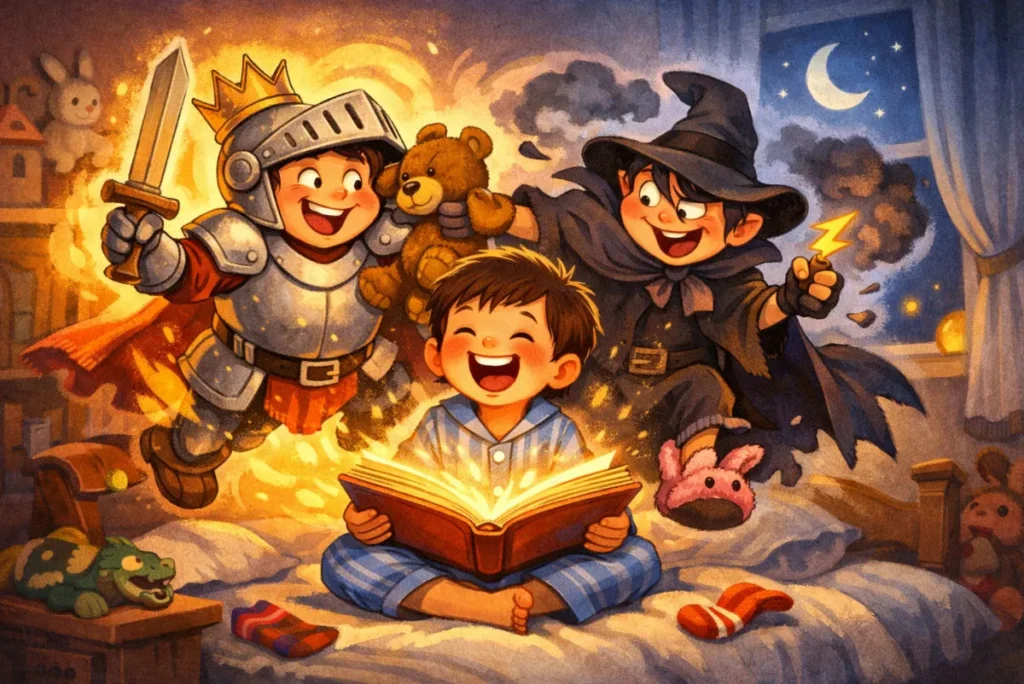
Let’s be honest.
We all say we’re adults now.
We enjoy “complex characters.”
We appreciate “moral uncertainty.”
We pretend we don’t need simple good guys and bad guys anymore.
And yet…
We still binge shows where someone clearly is the ‘bad guy’.
We still cheer when the villain finally gets what’s coming.
We still secretly love stories where the good person wins.
So what’s going on?
Why does our brain keep ordering the same emotional meal:
👉 Hero.
👉 Villain.
👉 Showdown.
👉 Justice.
Again and again.
Let’s work it out. without ruining the fun. 😄
🧭 1. Your Brain’s Original Survival App: “Good or Bad?”
Before humans had books…
Before Netflix…
Before bedtime stories…
We had:
“Is that thing going to help me… or eat me?”
That’s it. That was the original mental software.
Safe = Good
Dangerous = Bad
Confusing = Panic
Our ancestors didn’t have time to second guess what might happen next.
They didn’t think:
“Hmm, that wolf seems emotionally conflicted.”
They thought:
“RUN.”
So our brains learned very early:
👉 Categorise fast.
👉 Decide faster.
👉 Stay alive.
Fairy tales simply dressed this instinct up in costumes.
The wolf = danger
The witch = threat
The giant = problem
The monster = nope-nope-nope
They’re not just characters.
They’re emotional warning signs.
Your brain still loves that clarity.
😌 2. The Sweet Relief of “At Least I Know Who’s Wrong”
Real life is exhausting.
Your coworker is nice… but annoying.
Your friend is loyal… but unreliable.
Your relative is loving… but difficult.
Everyone is a mixed bag.
Including you.
Especially you. 😉
But stories?
Stories give us a break.
In stories:
The villain is bad.
The hero is good.
The rules are clear.
No group chat debates required.
It’s emotional fast food.
Comforting. Predictable. Satisfying.
After a day of complicated conversations and awkward misunderstandings, your brain goes:
“Can I please just hate ONE person without feeling guilty?”
And stories deliver.
💪 3. Borrowed Bravery: Practicing for Life (Without Risk)
Ever wonder why kids beg for the same scary story?
Again.
And again.
And again.
You think:
“Don’t you know how this ends?”
They do.
That’s the point.
Psychologists call this rehearsing.
It’s emotional training.
When a child watches a hero face danger and survive, their brain learns:
👉 Fear happens.
👉 Courage is possible.
👉 Bad things can be beaten.
So when they face:
A dark hallway
A new school
A scary teacher
A big change
They’ve already “practiced” bravery.
Little Red Riding Hood isn’t about a wolf.
It’s about:
“Danger exists… and you can survive it.”
That’s powerful.
⚖️ 4. Kids Are Tiny Justice Machines
Here’s something wild:
Even babies care about fairness.
Researchers show infants little puppet shows where:
One puppet helps.
One puppet hurts.
And babies consistently prefer the helper.
Before they can talk.
Before they can reason.
Before they know any rules.
They already think:
“Hey… that wasn’t fair.”
It’s built in.
We are wired for justice.
So when stories show:
The bully loses
The liar is exposed
The villain falls
Our brain goes:
“Yes. That’s how it should be.”
It reassures us that goodness matters.
Even when real life sometimes forgets.
📱 5. Why This Matters in the Age of Doom-Scrolling
Now fast-forward to today.
We scroll through:
Arguments
Outrage
Scandals
Clickbait villains
Cancelled heroes
Our feeds are basically modern fairy tales.
Same structure.
New costumes.
We’re still hunting for:
👉 Who’s good?
👉 Who’s bad?
👉 Who do I support?
👉 Who do I boo?
Because our brains haven’t changed.
Only the stage has.
That’s why simple narratives spread faster than complicated truths.
Clarity is comforting.
Nuance is tiring.
🌟 The Real Reason We Love Heroes and Villains
In the end, it’s not about drama.
It’s about hope.
We love these stories because they whisper:
Courage matters
Kindness counts
Evil isn’t unbeatable
Your choices mean something
Every hero story is really saying:
“You’re not powerless.”
And every villain is there to prove it.
🧠 Final Thought (Before You Scroll Again)
Next time you find yourself cheering for a hero…
Or hating a fictional villain a little too much…
Remember:
You’re not being childish.
You’re being human.
You’re using ancient software designed to survive, learn, and hope.
Wrapped in a good story.
And honestly?
That’s kind of beautiful.
Now… back to scrolling. 😉