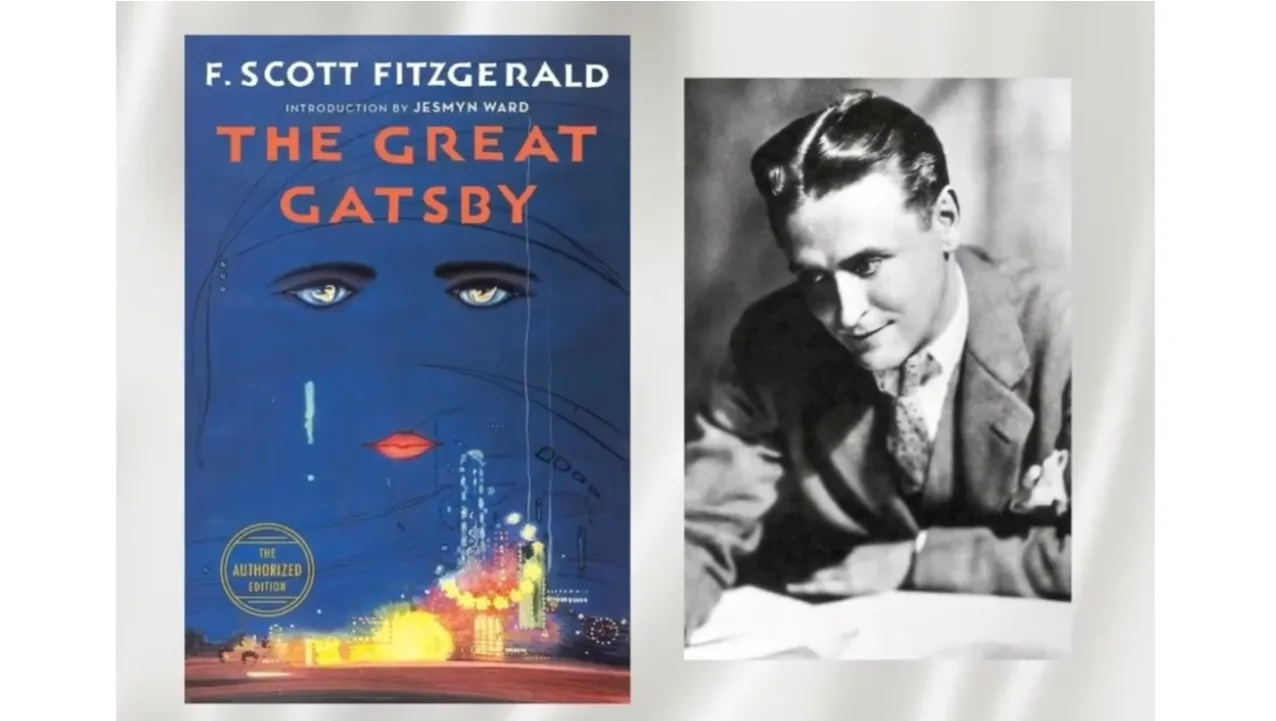
# F. Scott Fitzgerald and Status Scents
F. Scott Fitzgerald did not merely want us to see the cost of Gatsby’s wealth. He wanted us to inhale it.
In The Great Gatsby, luxury is rarely confined to objects. It enters the weather, the light, the music and even the air. Gatsby’s world gleams so insistently that ordinary things begin to behave like expensive ones. Cars become symbols. Shirts become emotional spectacles. Parties become entire climates.
Even flowers seem to serve champagne.
As Daisy admires Gatsby’s mansion and grounds, Fitzgerald describes:
“The sparkling odor of jonquils and the frothy odor of hawthorn and plum blossoms.”
The flowers do not simply smell sweet. Their fragrance sparkles and froths. Fitzgerald borrows the language of bubbles, crystal glasses and celebratory drink, then pours it over the garden.
This is the status scent: an aroma that tells the reader not only what is present, but what the environment wants people to believe.
When Flowers Begin to Perform
“Sparkling” is not an obvious word for smell. It belongs more naturally to sight—a jewel sparkling under electric light—or to the sensation of a carbonated drink.
“Frothy” is even more physical. It suggests foam rising above a glass, something light, overflowing and briefly extravagant.
By attaching these words to floral scents, Fitzgerald creates synaesthesia: one sense expressed through the language of another. We do not merely smell the flowers. We see their shimmer and feel their effervescence.
The effect is luxurious because the language makes nature participate in Gatsby’s performance. The garden is not allowed to be quiet, earthy or ordinary. Its flowers must sparkle. Its blossoms must froth. Even their fragrance seems to have been instructed to impress Daisy.
Gatsby has spent years constructing an environment designed for one person’s arrival. The mansion, gardens, clothes and servants all contribute to the same message:
Look what I have become.
The scents deliver that message before anyone says it aloud.

The Environment as an Introduction
Writers often introduce wealth by listing possessions: the marble staircase, imported furniture, expensive car or tailored clothes.
Fitzgerald does something subtler. He makes the environment preload Gatsby’s status before the social performance is complete.
A preload prepares the reader’s emotional expectations. We enter a place and absorb its signals before consciously interpreting them. A room smelling of polish, leather and cigar smoke communicates one kind of authority. A foyer filled with lilies and expensive perfume communicates another.
Gatsby’s garden smells sparkling and frothy. Before we assess his money rationally, we have already breathed in celebration, excess and seduction.
The fragrance tells us that this is not merely a home. It is a production.
Gatsby’s wealth must remain active because it exists to accomplish something. Every party, light and flower is part of his attempt to transform money into time—to purchase a route back to Daisy and the past they shared.
His possessions are not resting. They are auditioning.
The Missing Third Scent
The full sentence continues beyond the quoted passage. After the jonquils, hawthorn and plum blossoms, Fitzgerald adds “the pale gold odor of kiss-me-at-the-gate.”
This third description deepens the effect.
“Pale gold” gives fragrance a colour associated with wealth, but it is not the hard gold of coins or jewellery. It is softened, romanticised and made almost dreamlike. Meanwhile, the flower’s name—kiss-me-at-the-gate—introduces courtship directly into the garden.
The sequence therefore moves through three kinds of luxury:
Sparkle suggests brilliance and display. Froth suggests abundance and celebration. * Pale gold suggests money transformed into romance.
Gatsby’s garden becomes a sensory version of his ambition. Wealth has been converted into beauty, and beauty has been arranged as an invitation to Daisy.
Yet the flower’s name also contains an uncomfortable boundary: the gate. Gatsby can build the mansion, cultivate the grounds and flood the night with light, but he cannot guarantee that Daisy will cross fully into the future he has imagined.
The garden advertises possibility. It cannot secure the result.
A Fragrance Can Have Social Class
Smells carry social information.
Fresh paint suggests recent improvement. Furniture polish suggests maintenance and control. Cut flowers imply that somebody had the money and time to purchase beauty that will soon die. Leather, perfume, beeswax, tobacco and polished timber can all imply status depending on the period and setting.
This does not mean a writer should rely on clichés such as every wealthy character smelling of expensive cologne. The more interesting approach is to show how wealth alters the environment.
Perhaps a rich house contains flowers replaced before they wilt. Its fireplaces smell unused because the rooms are heated invisibly. Its kitchen carries no cooking odours because the work happens behind closed doors. Its towels smell like a hotel rather than a family.
Poverty also has an environmental scent, but it should never be reduced automatically to filth. It might appear through damp clothes that cannot be dried, cooking oil reused too many times, industrial cleaning fluid or the warm electrical smell of an ageing heater.
The important question is not, “What does money smell like?”
It is, “What has money allowed this person to conceal, maintain, replace or display?”
The Beautiful Lie
Gatsby’s flowers are genuinely beautiful. Fitzgerald does not need them to be fake for the display to be artificial.
That distinction is central to the novel.
The mansion exists. The money is real enough to purchase shirts, champagne and orchestras. The parties genuinely happen. Yet all this reality has been organised around an impossible belief: that Gatsby can recover the past exactly as it was.
The sensory beauty therefore contains a lie.
The flowers sparkle because Gatsby’s dream requires them to sparkle. Their fragrance is part of the pressure he places upon the meeting. Daisy is not simply visiting a man she once loved. She is entering an environment engineered to overwhelm resistance.
Luxury becomes persuasive.
This is why status scents are so effective in fiction. A character can distrust another person’s words while still being influenced by the world that surrounds them. The soft leather, fresh lilies and expensive soap whisper credibility before the character has decided whether anyone deserves it.
Smell can make power feel natural.

Status Scent as Characterisation
A status scent reveals more when it is connected to desire.
Imagine two wealthy homes. One smells of beeswax, old books and fireplace ash. The other smells of white orchids, chilled air and an aggressively neutral cleaning product.
Both suggest money, but they suggest different relationships with money. The first may value inheritance and continuity. The second may value control, newness and the removal of human traces.
Likewise, a character wearing too much expensive perfume may not feel powerful. They may be terrified that another smell—smoke, sweat, illness or poverty—will expose where they came from.
The scent becomes interesting when it creates tension between identity and presentation.
Gatsby’s garden does not only say that he is rich. It says that he needs Daisy to experience his wealth as romance. That need exposes the insecurity beneath the spectacle.
Try It Yourself
Write a character entering a place designed to impress them.
Do not begin with its appearance. Begin with the air.
Choose three scents that reveal different parts of the owner’s status:
- A scent created deliberately, such as perfume, flowers or polished wood.
- A scent produced by the machinery of wealth, such as conditioned air, a heated pool or a chauffeur’s leather interior.
- A hidden scent the owner failed to control.
The third scent is where the story begins. Beneath the roses, perhaps there is bleach. Beneath the leather, damp. Beneath the expensive candle, burnt food from a kitchen in crisis.
Then choose verbs and adjectives from another sensory field. Let perfume glitter, cigar smoke curl like velvet or cut flowers fizz in crystal vases.
Do not merely announce that the setting is luxurious. Make the atmosphere perform luxury for the visitor.
Finally, ask what the performance is trying to achieve. Is the owner attempting to seduce, intimidate, reassure or conceal?
What Wealth Wants You to Breathe
Fitzgerald’s floral sentence works because it describes more than a garden.
“Sparkling” and “frothy” carry the social world of champagne into the natural world of blossoms. “Pale gold” turns fragrance into colour and money. Together, the scents make Gatsby’s estate feel enchanted, abundant and almost impossibly responsive to Daisy’s presence.
But the beauty is under pressure.
Every flower is part of a dream Gatsby needs Daisy to accept. The garden does not merely bloom around his wealth; it helps advertise the identity that wealth has allowed him to construct.
Use scent this way and it can reveal status before the bank balance, mansion or tailored suit appears. It can tell us what a character has purchased, what they want others to believe—and what they are still unable to own.
This is the tenth article in The Scent of a Story series.