
# Maurice Sendak and the Smell of Sanctuary
A character can sail through night and day, travel in and out of weeks, and cross almost an entire year—but one familiar smell can bring the whole journey to an end.
That is the quiet brilliance of Maurice Sendak’s Where the Wild Things Are. The story is remembered for its monsters, forests and famous wild rumpus, but its emotional turning point does not arrive through something Max sees. It arrives through something he smells:
“Then from far away across the world he smelled good things to eat.”
The sentence is simple enough for a child, yet it performs an extraordinary piece of narrative work. It reaches across an impossible distance, punctures Max’s fantasy and reminds him that somewhere beyond the wild things, someone has prepared food for him.
This is smell as sanctuary.
The Scent That Ends the Adventure
At the beginning of the story, Max is angry. He makes mischief, challenges his mother and is sent to bed without eating anything.
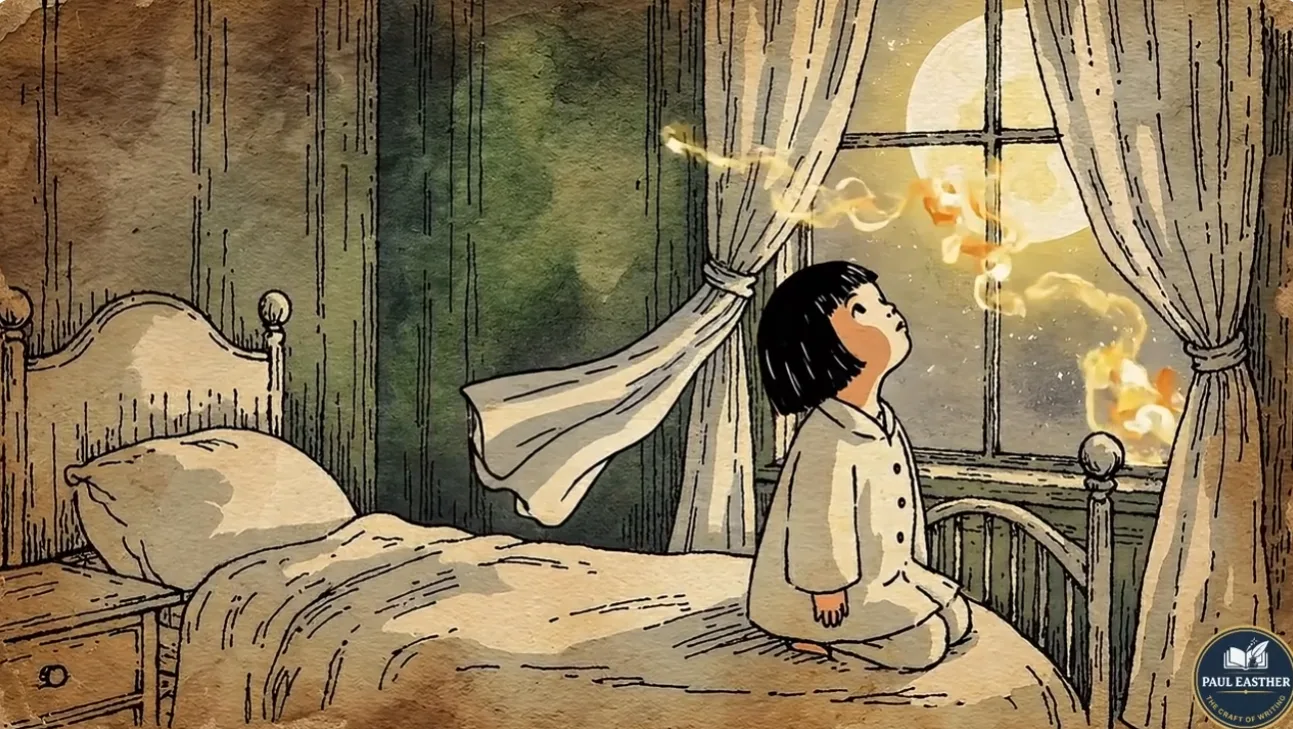
His bedroom then transforms. A forest grows around him, walls disappear and an ocean carries him to the land of the wild things. There, Max conquers the monsters by staring into their yellow eyes without blinking. He becomes their king and presides over the wild rumpus.
For a moment, his fantasy gives him everything anger promised him: freedom, power and a world without parental authority.
But power does not make him feel loved.
After sending the wild things to bed without their supper, Max becomes lonely. This detail matters because he has repeated the punishment imposed upon him. He is now on the other side of it, occupying the position of authority, yet discovering that command is not the same as connection.
Then the smell arrives.
It does not merely remind Max that he is hungry. It reminds him that he belongs somewhere.
Why “Good Things to Eat” Works
Sendak could have named the food. He could have described soup, bread, cocoa, stew or some other recognisable supper.
Instead, he writes “good things to eat.”
That phrase possesses the loose, expansive logic of childhood. It does not identify one meal because it does not need to. The emotional meaning of the food is more important than its ingredients.
“Good things” can become whatever the reader associates with comfort. One child may imagine hot soup. Another may think of toast, warm milk, rice, dumplings or something simmering in a family kitchen. By leaving the food unnamed, Sendak gives every reader room to supply a private memory.
The language is also free of sophistication. Max does not analyse the aroma or divide it into ingredients. He does not detect herbs, butter or roasted vegetables. He simply recognises that something good is waiting for him.
That recognition is enough.
This is an important lesson for writers. A precise sensory description can make a setting convincing, but strategic vagueness can make an emotion universal. The question is not always, “What exactly does this smell like?” Sometimes the more powerful question is, “What does this smell mean to the character?”
To Max, it means home.
An Invisible Thread Across the World
Smell is particularly effective here because it is invisible.
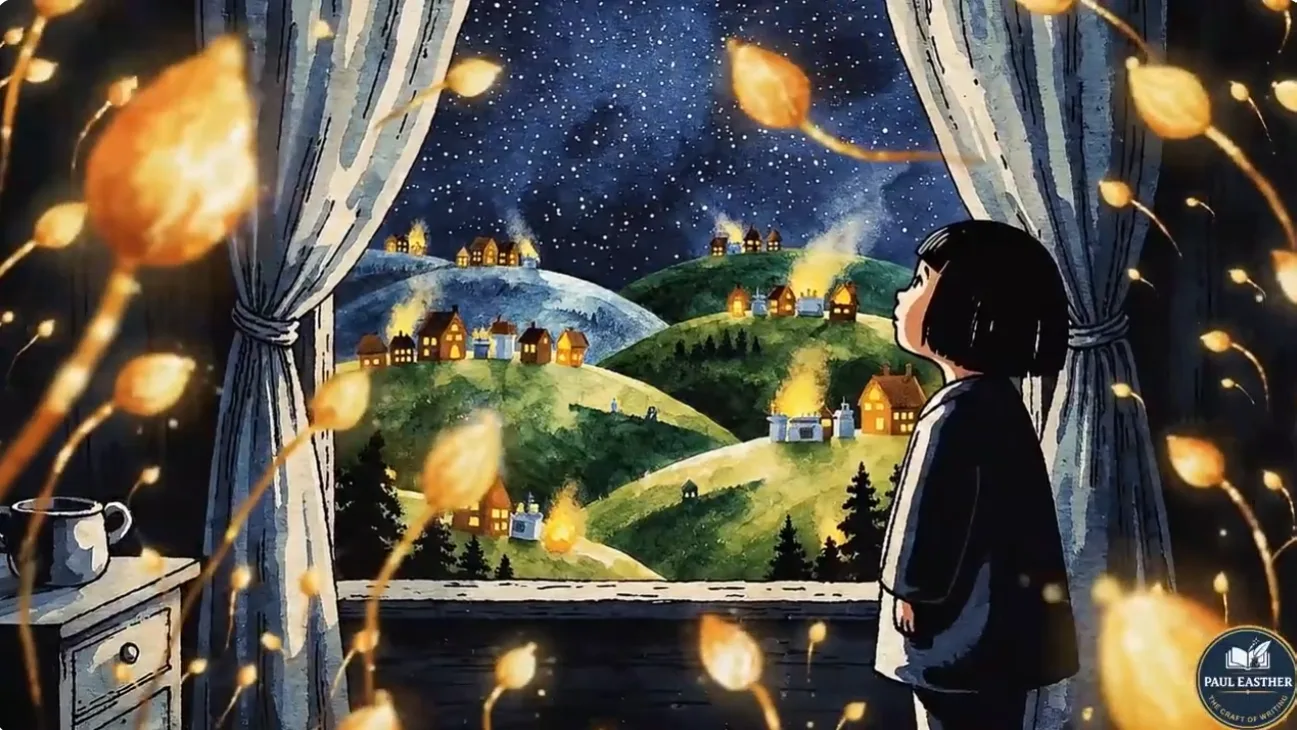
Max cannot see his bedroom from the land of the wild things. He cannot see his mother or the supper she has left for him. The aroma travels to him “from far away across the world,” behaving almost like a thread attached to the place he belongs.
Sight would have broken the fantasy. If Max suddenly saw his bedroom, the imaginative world might appear to collapse mechanically. Smell allows both realities to exist at once. He can remain among the wild things while sensing the presence of home.
The result is not an abrupt awakening but an emotional choice.
Max gives up being king because he wants to be “where someone loved him best of all.” The smell prepares that decision before the words explain it. His body recognises the way home before his conscious mind declares it.
That is one of scent’s most valuable narrative abilities: it can move beneath thought. A character smells something, reacts and only afterwards understands what the reaction means.
Food as Evidence of Continuing Love
The supper waiting in Max’s room is more than a reward. It is evidence that love survived the argument.
Max has behaved badly. His mother has become angry. He has been sent away from the family table. Yet when he returns, his supper is waiting—and it is still hot.
That final warmth changes the meaning of the entire story.
The food tells Max that punishment was temporary. Anger did not cancel affection. The door remained open even when he imagined himself across oceans and years.
Sendak never needs to write a reconciliation scene in which mother and son explain their emotions. There is no long apology, speech or embrace. The meal performs that work silently.
Its aroma calls him home; its heat proves that he was expected.
For writers, this is a lesson in emotional restraint. Love does not always need to be announced. It can be placed in an object, an action or a sensory detail. A cup left beside a bed, a coat warming by the fire or a familiar meal kept hot can communicate more than a paragraph of dialogue.
Sanctuary Smells Different to Everyone
A sanctuary scent is not automatically pleasant in the conventional sense. It becomes comforting because of the relationship attached to it.
The smell might be onions frying in an old pan. It might be woodsmoke clinging to a grandparent’s jumper, engine oil in a parent’s garage or antiseptic in the hospital room where someone once felt protected.
The emotional association creates the sanctuary.
This is why generic descriptions such as “the comforting smell of home” usually feel weak. They tell the reader what to feel without giving the feeling a physical origin.
A stronger version gives us the aroma and lets the character’s response reveal its meaning:
The corridor smelled of boiled cabbage and furniture polish. For the first time in three days, she stopped checking the exits.
The cabbage is not inherently comforting. The reaction makes it so.
Use the Scent at the Breaking Point
The best moment for a sanctuary smell is often when a character has reached the limit of endurance.
They may be physically lost, emotionally exhausted or surrounded by danger. At that point, introduce an aroma associated with safety. It can signal that rescue is near—or make the absence of rescue even more painful.
A soldier might smell the soap his father used. A runaway might catch the scent of bread identical to that from the bakery below her childhood flat. A grieving character might open a wardrobe and find that a dead partner’s coat still carries the faint smell of rain and tobacco.
The scent should alter the character’s direction. If nothing changes after it appears, it risks becoming decoration.
Max smells good things to eat and immediately gives up his crown. The smell produces a decision, the decision ends the fantasy, and the journey home begins.
That is sensory detail functioning as plot.
Try It Yourself
Write a character at the worst point of a journey. Place them somewhere hostile, unfamiliar or emotionally empty.
Now introduce one smell from home.
Do not explain immediately why it matters. Let the body react first. Perhaps the character stops walking, lowers a weapon, loses their anger or suddenly realises how tired they are.
Only then reveal the memory attached to the aroma.
Ask yourself:
Who created this smell in the character’s past? What form of safety does it represent? Why does it reach the character at this particular moment? What decision becomes possible after they notice it? * Does the scent promise a real home, or only the memory of one?
Finally, remove any sentence that directly labels the emotion. Instead of writing, “The smell made him homesick,” show what homesickness makes him do.
The Way Back
Maurice Sendak understands that the strongest force in Max’s world is not the ocean, the forest or even the terrible roar of the wild things.
It is the faint aroma of supper.
That smell crosses the world because emotional distance is not geographical. Max has travelled into the furthest reaches of anger and imagination, yet home remains close enough to breathe.
Use smell this way and it becomes more than atmosphere. It becomes an invitation, a memory and a route out of the wilderness.
Sometimes a character does not need a map to find the way back.
Sometimes they only need to recognise what is waiting for them.
This is the ninth article in The Scent of a Story series.