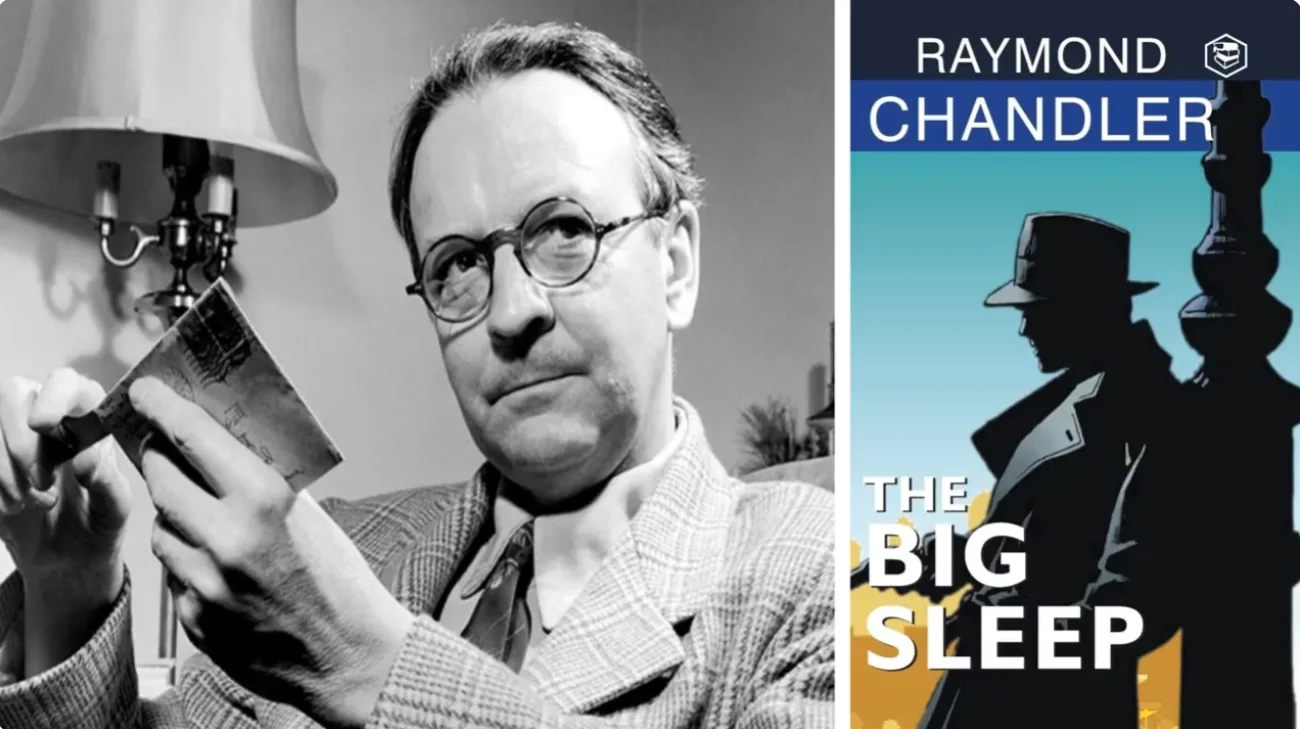
# Raymond Chandler and Conceptual Decay
Raymond Chandler didn’t simply want you to see a corrupt world. He wanted you to breathe it.
In his 1939 novel The Big Sleep, rooms are rarely neutral containers. Their smoke, perfume, dampness and stale air tell Philip Marlowe—and the reader—what sort of moral atmosphere they have entered.
Chandler could have described a room as stuffy, musty or unpleasant. Instead, he makes the air behave like evidence. It clings to the body. It fills the lungs. It carries traces of money, sex, death and concealment.
This is what I call conceptual scenting.
A conceptual scent doesn’t merely identify an odour. It makes that odour represent something larger. The room smells corrupt because the people inside it are corrupt. The perfume becomes oppressive because the person wearing it represents danger. The air seems poisonous because something morally poisonous has happened there.
The reader isn’t simply told that the world is rotten.
The reader is made to inhale the decay.
Air You Can Almost Touch
When Marlowe enters General Sternwood’s greenhouse, Chandler writes:
“The air was thick, wet, steamy and larded with the cloying smell of tropical orchids in bloom.”
The extraordinary word is “larded.”
Chandler could have said the air was filled with the smell of orchids. “Larded” makes it feel coated with fat. The atmosphere becomes greasy, excessive and almost chewable.
That one word crosses sensory boundaries. Air acquires weight. Smell acquires texture. Breathing begins to resemble swallowing.
The orchids should be beautiful. They should suggest wealth, rarity and cultivated taste. Instead, their fragrance is “cloying”—so sweet and abundant that it becomes sickening.
Pleasure has been pushed past its natural limit.
That excess matters because the greenhouse belongs to a wealthy and decaying household. The Sternwood family possesses money, luxury and social position, but its apparent refinement cannot prevent corruption from flourishing underneath.
The orchids are not simply plants in a greenhouse. They become the smell of beauty growing too close to rot.

When Description Becomes Judgement
Ordinary sensory description answers a straightforward question:
What does this place smell like?
Conceptual scenting asks something more powerful:
What does this smell mean?
A writer might describe a neglected room as smelling of damp carpet, cigarettes and old food. Those details help us imagine the physical setting.
Chandler pushes beyond that function. His smells often carry judgement. They tell us whether a place feels exhausted, false, corrupt or dangerous.
Later in The Big Sleep, Marlowe encounters a room containing sandalwood, incense, black candles and a dead man. Chandler eventually describes its atmosphere as “poisonous and unreal.”
“Poisonous” is more than a measurement of air quality. It tells us that the whole scene is contaminated. “Unreal” tells us that the arrangement—candles, incense and staged body—has crossed from ordinary crime into nightmare.
The air has absorbed the meaning of what happened inside it.
This is why conceptual scenting is so effective. The writer doesn’t pause to explain that the scene is morally corrupt. The reader reaches that conclusion by breathing the room with the character.
The Noir Collision
Chandler’s sensory world is built from collisions.
Beautiful orchids produce a suffocating sweetness. Expensive perfume announces danger. Clean rooms contain ugly secrets. Fresh night air still carries automobile exhaust and the stale memory of the city.
Nothing remains entirely pure.
This is central to noir. The genre doesn’t simply place criminals in dark rooms. It creates a world in which corruption has entered the atmosphere itself.
A person can leave a crime scene, but the smell follows. A window can be opened, but the city air arriving through it is already contaminated. Wealth can purchase flowers, incense and perfume, but it cannot purchase innocence.
Chandler makes moral corruption environmental.
It is in the carpets, curtains, cigarettes, damp streets and overheated rooms. His Los Angeles does not provide a clean position from which Marlowe can observe everyone else.
He has to move through its air.
Perfume as an Intruder
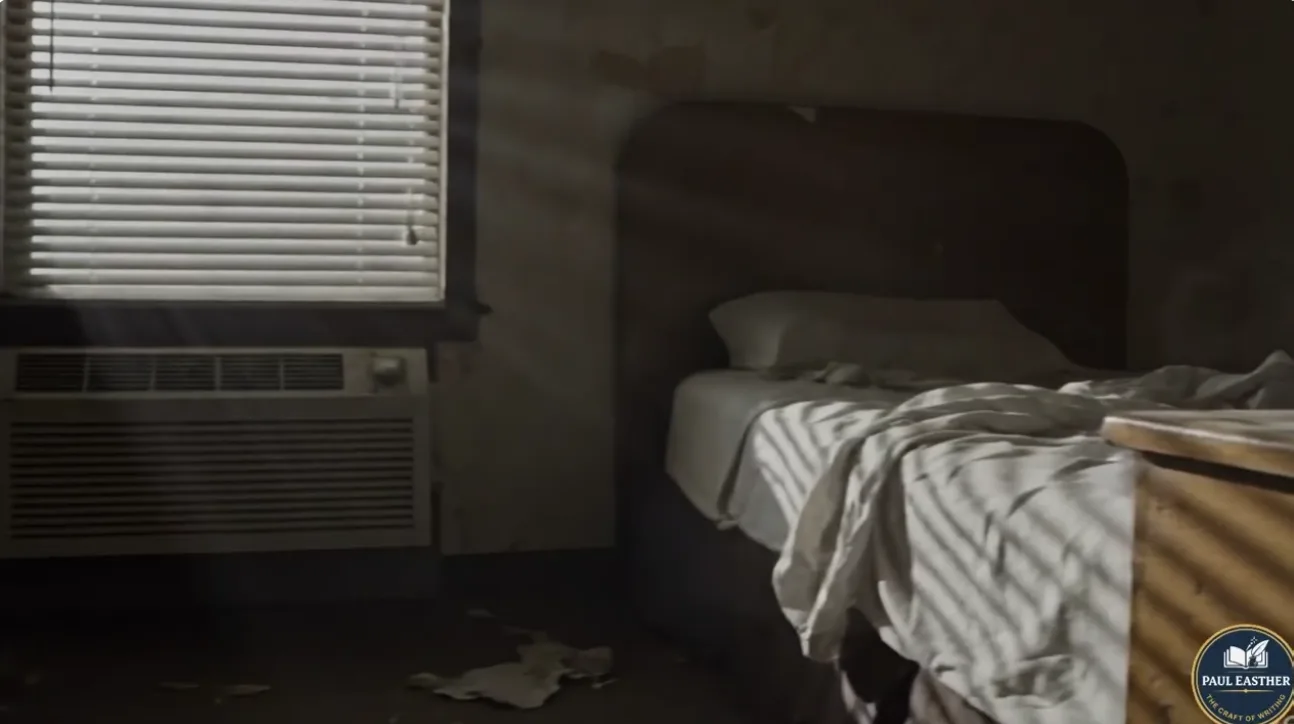
At one point, Marlowe enters his darkened apartment and immediately knows that something is wrong.
He cannot yet see the intruder. He notices a scent.
A heavy, cloying perfume hangs in the air.
The perfume performs the work usually assigned to a noise or visible movement. It tells Marlowe that he is not alone.
More importantly, it changes the meaning of his home before the intruder is revealed. His private space has been entered and marked by someone else’s presence.
The scent is not passive. It has occupied the room.
Again, Chandler’s choice of “cloying” matters. The perfume is sweet, but its sweetness is excessive and unwanted. It coats the atmosphere just as the orchids do in Sternwood’s greenhouse.
The repeated sensation creates a connection between beauty and suffocation. In Chandler’s world, attractive things often arrive with too much pressure. Their sweetness becomes a form of aggression.
Marlowe eventually opens the windows, allowing night air into the apartment. But even that outside air carries stale sweetness, exhaust and the residue of city streets.
There is no completely clean atmosphere waiting beyond the room.
The Smell of Time
Smell is particularly good at suggesting time because odours linger after their causes disappear.
Smoke remains after the cigarette has been extinguished. Perfume stays in a room after its wearer leaves. Dampness reveals years of neglect. Rot tells us that decay has been progressing beyond our sight.
A visual detail usually shows what is present now. A smell can reveal what happened minutes, days or years earlier.
Chandler repeatedly exploits this quality.
One office has what he calls the musty smell of years of routine. That is not a chemically precise description. Routine has no literal odour.
Yet we understand it immediately.
We imagine old files, tired furniture, stale smoke, dust and countless identical working days accumulating inside the walls. Chandler compresses years of institutional exhaustion into one sensory impression.
The smell becomes time made breathable.
Smell Before Explanation
Chandler frequently allows Marlowe’s nose to identify danger before his conscious mind has assembled the facts.
That order is important:
- Something enters the senses.
- The body reacts.
- The mind searches for the cause.
- The meaning becomes clear.
This sequence places the reader inside the investigation.
If Chandler first explained that someone had entered the apartment and then mentioned perfume, the scent would merely confirm information we already possessed.
By giving us the perfume first, he turns it into a clue.
The reader experiences the same brief uncertainty as Marlowe. Someone has been here. Someone may still be here. The air knows something that we don’t.
That is an excellent principle for suspense writing: let the setting detect the danger before the character can see it.
Try It Yourself: Give the Air a Moral Quality
Begin with a simple sentence:
The room smelled unpleasant.
Now decide what has happened in the room—or what kind of life has accumulated there.
Has someone been waiting for years? Has a family concealed a scandal? Has money protected cruelty? Has violence just occurred? Is a character pretending that everything is normal?
Replace the generic smell with physical evidence:
The room smelled of damp curtains and flowers left too long in their water.
Now push the smell toward a concept:
The flowers had sweetened past beauty. The whole room smelled as though it had been waiting politely to die.
The final sentence doesn’t identify a specific chemical odour. It converts the smell into an idea: suppressed decline.
Try building your own conceptual scent around:
Failed respectability Exhausted authority Concealed violence Old resentment Artificial romance Wealth without warmth * Cleanliness after panic
Keep one foot in the physical world. Give the reader something they can genuinely imagine smelling, then let the comparison carry them toward the larger meaning.
Make the Atmosphere Guilty
Chandler’s great trick is making the environment complicit.
The air does not sit innocently around the crime. It absorbs the perfume, smoke, sweat and decay of the people who occupy it. By the time Marlowe arrives, the room is already testifying.
That is what separates evocative sensory writing from decoration.
A decorative smell tells us that orchids are present.
A functional smell makes us feel trapped inside their sweetness.
A conceptual smell makes that suffocating sweetness stand for an entire household rotting beneath its luxury.
Patrick Süskind builds a world from scent. Roald Dahl uses it as a visceral joke. Gillian Flynn makes pleasant fragrance conceal an ugly truth.
Raymond Chandler makes the air itself guilty.
This is the fourth article in The Scent of a Story series.