How treating the impossible as ordinary leaves the reader trapped between two realities.
The Sense of the Mind
Writing does not only put pictures into our imagination. At its most powerful, it reaches further—into the private machinery of the mind.
A carefully chosen voice, contradiction or missing explanation can create confusion, suspicion, desire, discomfort or dread without anything physically happening to the reader. The story stops being something we merely observe. Our own thoughts become part of its construction.
Great writers understand this. They do not simply tell us what a character feels; they manipulate the way we think and feel.
In this Writer Mind Games series, I examine how remarkable authors achieve that effect: the device they use, the reaction it triggers and what other writers can learn from it.
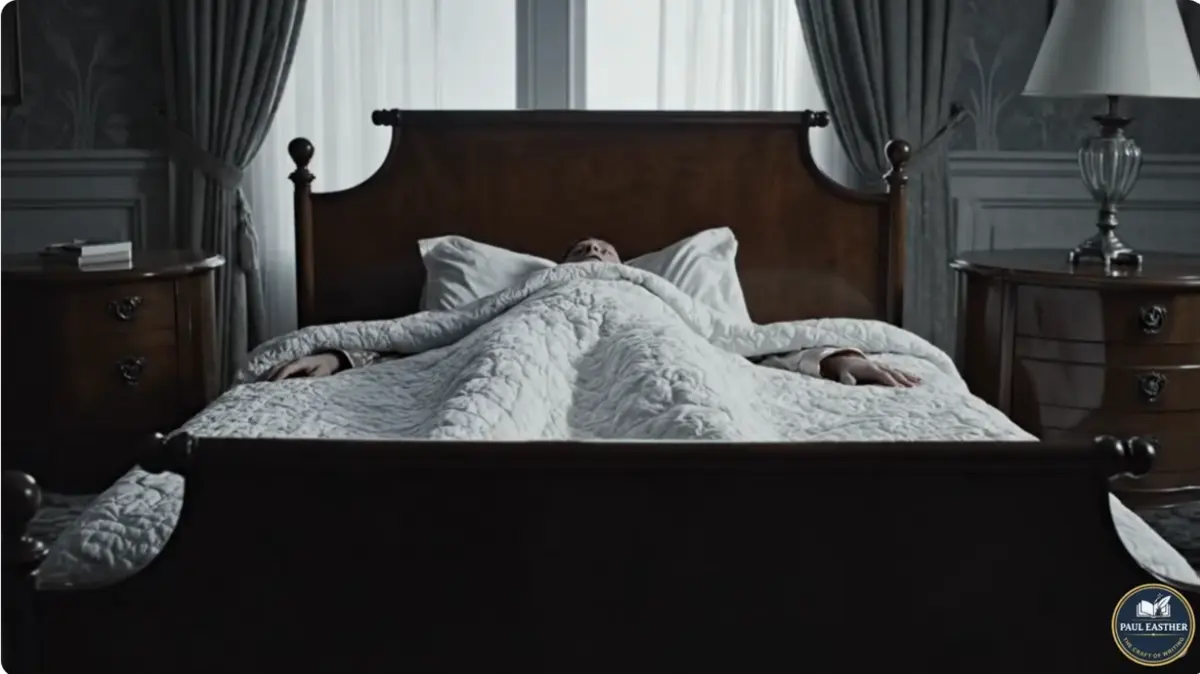
Our first mind game begins with a man waking up for work.
Unfortunately, he is no longer entirely a man.
Franz Kafka and The Metamorphosis
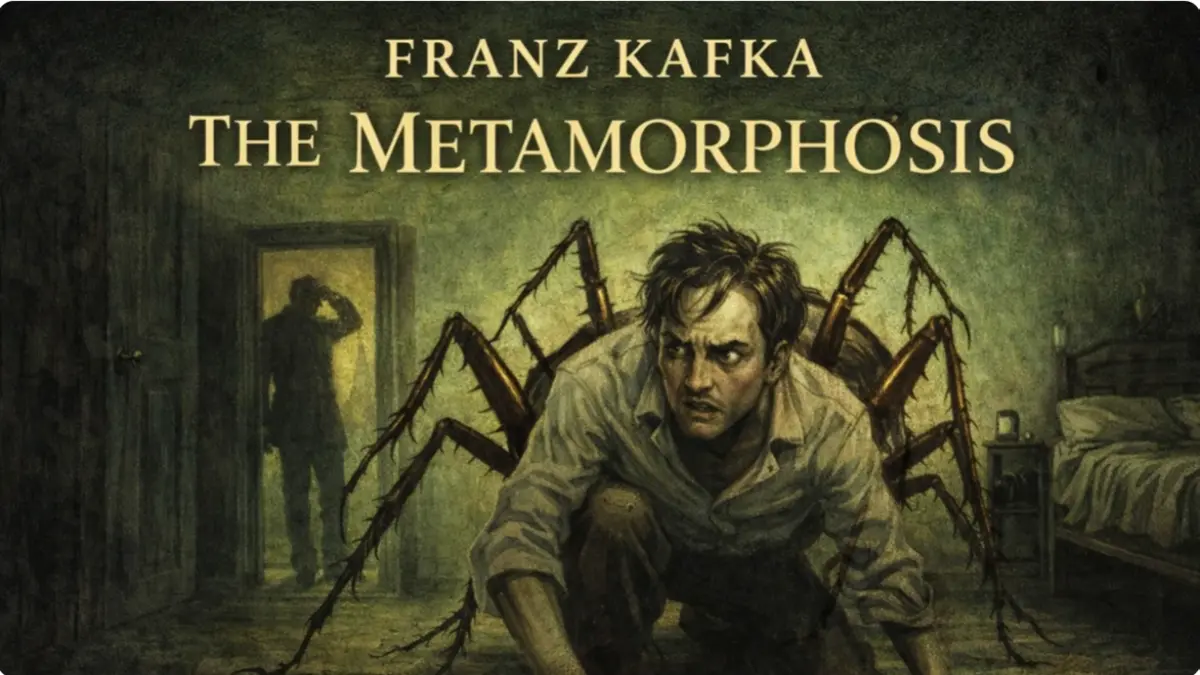
Published in 1915, Franz Kafka’s The Metamorphosis begins with one of literature’s most astonishing transformations. Travelling salesman Gregor Samsa awakens to discover that he has become some kind of monstrous vermin.
Kafka never offers a scientific explanation. There is no experiment, curse, infection or supernatural visitor. Gregor simply wakes up that way.
Yet the transformation itself may not be the strangest part of the scene.
The Trick: Make the Impossible Inconvenient
A more conventional writer might begin with screaming, horror and frantic questions:
What has happened to me? Am I dreaming? How can this be possible?
Gregor is certainly distressed—but his thoughts soon turn towards work. He worries about missing his train, angering his employer and failing to support his family.
He responds to an impossible transformation as though it were a disastrous inconvenience on an already stressful morning.
That is Kafka’s trick.
He does not ask the reader to believe that becoming an insect is realistic. Instead, he surrounds the impossible event with painfully familiar concerns: getting out of bed, arriving late, disappointing the boss and meeting family obligations.
The ordinary details make the impossible event feel disturbingly close to reality.
The Feeling: The Brain Spin
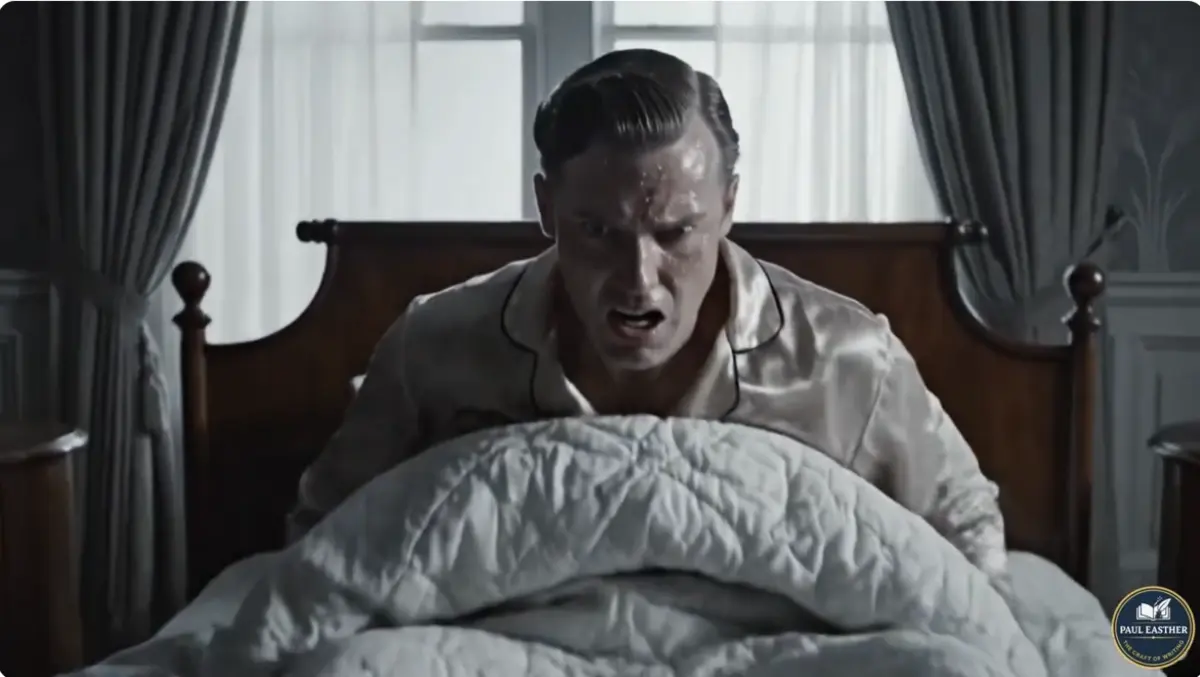
The reader’s mind immediately tries to repair the contradiction.
A man cannot simply become a monstrous creature. Surely an explanation is coming. Perhaps Gregor is dreaming, hallucinating or speaking metaphorically.
But Kafka refuses to restore the familiar rules.
Even more unsettlingly, Gregor does not react as we expect him to. The event is extraordinary, but the narration remains controlled and almost businesslike. The reader is left suspended between two incompatible realities:
This is impossible.
Everyone is behaving as though it has happened.
That collision creates what I call the Brain Spin—the disorienting sensation of trying to make logical sense of a world that has quietly abandoned logic.
Kafka pulls the rug from beneath reality without announcing that the floor has moved.
The Deeper Disturbance
The transformation is not merely a bizarre plot device. It exposes something that was already present.
Before Gregor’s body changes, his life is dominated by work, obligation and his family’s dependence upon him. He is valued chiefly for what he provides. Once he can no longer work, his place within the household begins to disappear.
The physical transformation makes his existing alienation visible.
That may be why the story lingers in the mind. Beneath its impossible premise lies a recognisable fear:
If I can no longer be useful, will I still be loved?
Suddenly, the monstrous creature is not the most frightening thing in the room. The truly disturbing element is the conditional nature of human acceptance.
What Writers Can Learn from Kafka
When something impossible happens in a story, the instinct is often to emphasise it. Characters gasp. The prose becomes dramatic. Explanations begin arriving.
Kafka demonstrates another possibility: make the impossible event strangely ordinary.
To create your own Brain Spin:
- Introduce one event that violates the rules of reality.
- Describe it in calm, practical language.
- Give the character an embarrassingly ordinary concern.
- Withhold the explanation the reader expects.
- Allow the impossible event to expose an emotional truth.
Imagine a woman discovering that her reflection has stopped copying her. Instead of screaming, she worries that she will be late for a dental appointment.
Or a man notices that his house has moved several metres during the night. His first thought is whether the postman will still find him.
The greater the contrast between the impossible event and the mundane reaction, the more the reader’s mind begins to spin.
Your Turn
Write a scene in which your character wakes to something impossible—but refuses to react in the expected way.
Do not explain what caused it. Do not let the character ask all the questions the reader is asking. Give them one immediate, everyday problem that somehow seems more urgent.
Then ask yourself:
What hidden truth does the impossible event make visible?
That is where Kafka’s real mind game begins.
Writer Mind Games explores how celebrated authors use language, structure and perspective to change what happens inside the reader’s mind.
Next in the series: Agatha Christie and the Analytical Itch.