
How talking cats, falling fish and impossible coincidences begin to feel as natural as making breakfast.
The Sense of the Mind
Most writers establish the rules of their world and then ask us to believe them.
Haruki Murakami does something stranger.
He loosens our need for rules.
A man makes coffee. A teenager listens to an old record. Someone prepares a sandwich, walks through a quiet neighbourhood or sits alone in a library.
Then a cat speaks.
Fish fall from the sky.
A doorway appears between one reality and another.
Murakami rarely announces these moments with the dramatic fanfare we expect. The impossible arrives quietly, takes a seat beside the ordinary and behaves as though it has always belonged there.
The reader waits for an explanation.
None comes.
After a while, something peculiar happens: we stop demanding one.
Haruki Murakami and Kafka on the Shore
First published in Japanese in 2002, Kafka on the Shore follows two apparently separate journeys.
Fifteen-year-old Kafka Tamura runs away from home, attempting to escape a dark prophecy and the damaged family history surrounding him. His journey eventually brings him to a private library, where books, music and memory offer refuge—but not certainty.
In the novel’s second narrative, an elderly man named Nakata has lost much of his conventional intelligence and memory following a mysterious childhood incident.
He can, however, speak to cats.
The two characters do not understand the forces moving them. Events in one story echo through the other. Dreams resemble memories. Memories may belong to somebody else. Symbols step out of the imagination and begin acting independently.
Murakami connects these mysteries without fastening them into a single, comfortable explanation.
We are not solving a puzzle.
We are walking through a dream.
The Trigger: Entering the Storm
Near the beginning of the novel, Kafka is told that the storm ahead cannot simply be avoided:
“And once the storm is over, you won’t remember how you made it through… whether the storm is really over.”
The words sound encouraging at first. Storms pass. People survive them.
But Murakami removes the comforting boundary between the person and the danger.
The storm is not merely something happening around Kafka. It represents something within him—fear, fate, memory and the identity he has not yet learned to inhabit.
He cannot stand safely outside it and wait for the weather to improve.
He must enter it.
The quotation prepares us for the novel itself. We are about to pass into a story where familiar directions disappear. There may be no sun, no clock and no reliable line separating the physical world from the psychological one.
We may not understand precisely how we travelled through it.
We may not even know when we have emerged.
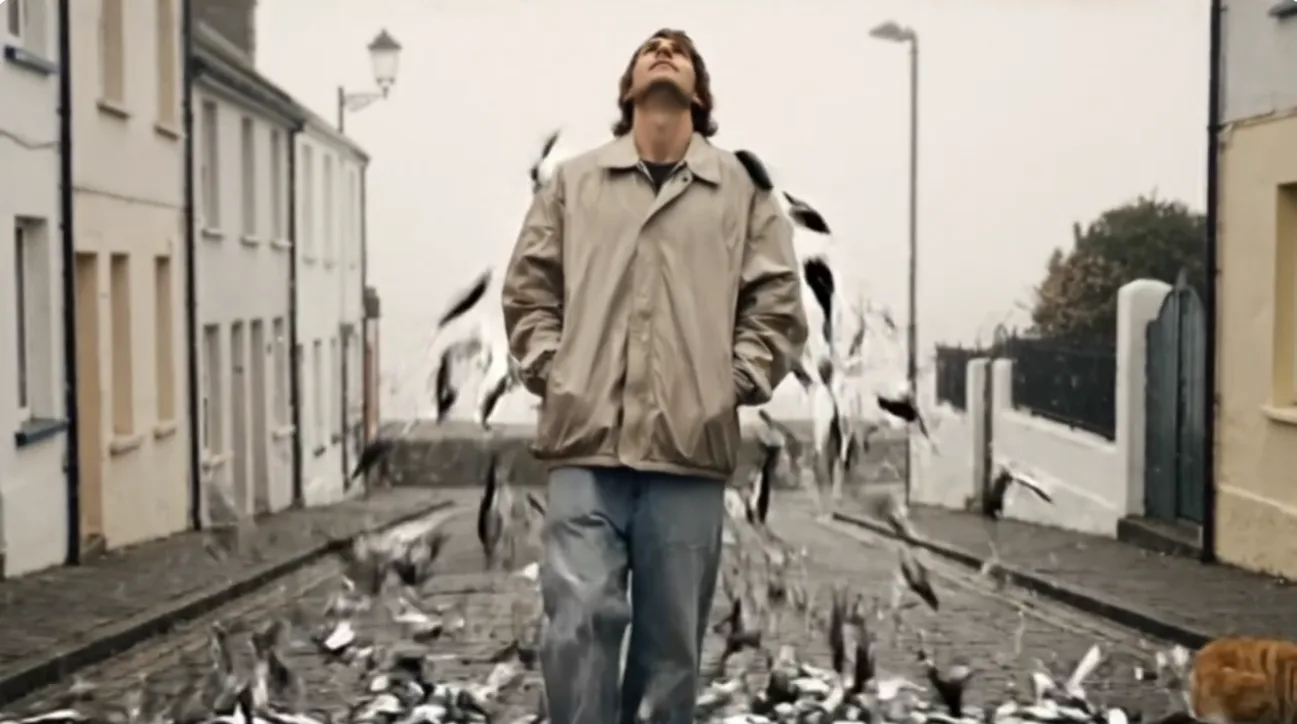
The Trick: Never Wake the Reader
Surreal fiction can easily break its own spell.
If characters constantly scream, demand explanations or declare that an event is impossible, they remind the reader that the story’s world has been disrupted. The bizarre occurrence becomes a spectacle under a bright light.
Murakami keeps the light low.
When something impossible happens, his characters often respond with curiosity, concern or practical acceptance. They ask what must be done next rather than whether reality has collapsed.
The prose remains calm.
Food is prepared carefully. Clothes are folded. Records are selected. Bus routes, rooms and meals receive the same measured attention as prophecies, spirits and supernatural events.
That evenness is crucial.
Murakami does not write the ordinary scenes as filler between the strange ones. The routine details create the rhythm that carries the reader across the boundary.
A talking cat enters a world that already feels solid because we know what the character ate, which music was playing and how the afternoon light entered the room.
The impossible borrows credibility from the ordinary.
The Logic of Dreams
Dreams rarely explain themselves while we are inside them.
A childhood home may contain a door that never existed. A stranger may somehow be someone we know. Years pass between two footsteps. None of this seems troublesome until we wake and attempt to describe it.
Murakami recreates that mental condition.
His events are not completely random. They are connected by emotional rather than mechanical logic.
A forest can become a journey into memory. A library can hold more than books. A song can open a passage into another life. A person encountered in the physical world may also represent guilt, longing or fate.
The reader senses that these things belong together before understanding how.
This is why trying to reduce Kafka on the Shore to a single literal explanation can feel unsatisfying. The novel behaves less like a machine whose workings can be exposed and more like a piece of music.
Its meaning lives partly in repetition, mood and resonance.
We do not ask a melody to prove why one note follows another.
We feel the relationship.
The Feeling: The Dream Walk
Murakami gradually places the reader in an unusual mental state.
Strict logic softens. Suspicion remains, but resistance fades. We become willing to follow the story into a forest without knowing whether the route is geographical, spiritual or psychological.
This is the Dream Walk.
It produces a sense of floatiness—not because nothing matters, but because several meanings can exist simultaneously.
A storm can be weather and inner turmoil.
A journey can be movement across Japan and movement into the self.
A character can be physically present, remembered, imagined or somehow all three.
Murakami does not force us to select one possibility and discard the others. He lets them overlap.
That uncertainty can feel peaceful and haunting at the same time. The reader is untethered from ordinary reality, yet held securely by the novel’s patient voice.
We are lost, but not abandoned.

Why the Mundane Details Matter
A writer attempting surrealism may concentrate entirely on inventing astonishing events.
Murakami demonstrates that the ordinary details are just as important.
Before readers will accept something impossible, they need a world whose physical texture they can trust. The smell of coffee, the sound of a record, the shape of a room and the preparation of a simple meal give the imagination something firm to stand upon.
The mundane also controls the emotional temperature.
If every paragraph announces another miracle, the reader quickly becomes numb. Strangeness needs silence around it.
Murakami gives extraordinary events room to echo by surrounding them with stretches of quiet life. This contrast allows a small disturbance—a misplaced memory, an uncanny song or an animal behaving almost humanly—to feel more unsettling than an explosion.
The technique resembles lowering your voice instead of shouting.
The reader moves closer.
What Writers Can Learn from Murakami
Begin by making the ordinary world specific.
Let your character perform a familiar task. They might butter toast, sort the mail, water a plant or choose a song.
Establish a calm, believable rhythm.
Then introduce one detail that cannot possibly belong.
Do not explain it immediately. More importantly, do not instruct the reader how astonished they should feel. Allow the character to respond according to an emotional logic that makes sense to them—even when the event itself does not.
Perhaps they recognise the impossible object.
Perhaps they have been expecting it.
Perhaps their first concern is what it might want for breakfast.
The stranger the event, the steadier the prose can become.
Finally, connect the impossible detail to something within the character. A fear, desire, memory or unresolved question should give the surreal image emotional weight.
Randomness may surprise us.
Meaningful strangeness follows us home.
Your Turn
Write a completely ordinary scene of approximately 200 words.
Give the character a routine task and include three precise sensory details. Establish the room, the time of day and the rhythm of what they are doing.
Then introduce one impossible event.
A voice comes from an unplugged radio. Rain begins falling upwards. A person’s reflection refuses to copy them. A lost childhood toy appears freshly painted on the kitchen table.
Do not let the character scream.
Let them study it. Speak to it. Continue making tea.
Most importantly, do not explain everything.
Give readers enough emotional connection to feel that the impossible event means something—but leave enough uncertainty for their own minds to enter the story.
That is how the Dream Walk begins.
Not with the moment reality breaks.
With the moment the reader decides not to wake up.
Previously in Writer Mind Games: Ursula K. Le Guin and the Big Realization.
Next: Jorge Luis Borges and the Mental Maze.