
What if the narrator who cannot see reality clearly is the only person who understands what is truly happening?
The Sense of the Mind
A conventional narrator describes confusion from a safe distance.
Ken Kesey makes us breathe it.
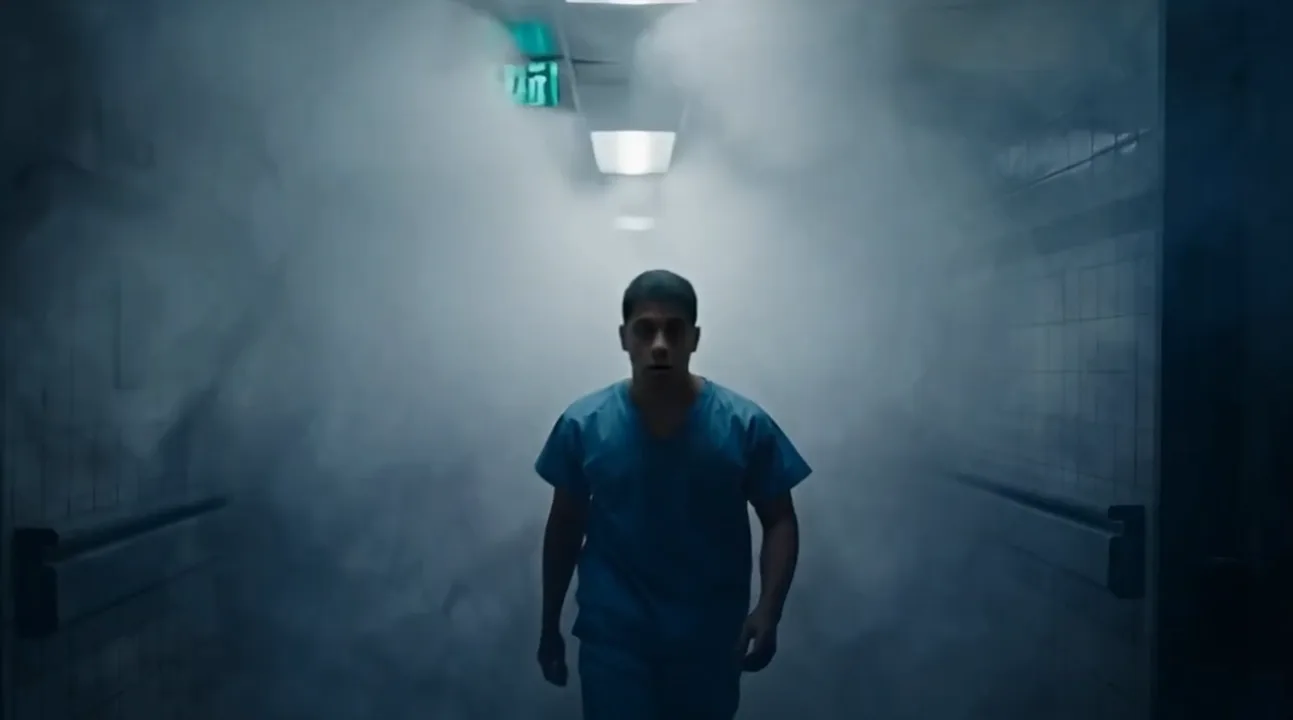
In One Flew Over the Cuckoo’s Nest, walls appear to move. Machinery hums beneath the floor. People grow larger or smaller according to how powerful they feel. A white fog spreads through the psychiatric ward until bodies, rooms and time itself become difficult to locate.
We know that much of this may exist only in the narrator’s mind.
But Kesey refuses to give us a clearer pair of eyes.
We must enter the ward through Chief Bromden’s perception, share his fear and learn to navigate reality while the floor shifts beneath us.
The result is more than uncertainty.
It is the Mental Fog: a heavy, claustrophobic state in which we can no longer separate hallucination from metaphor—or madness from insight.
Ken Kesey and One Flew Over the Cuckoo’s Nest
Published in 1962, the novel is set inside an Oregon psychiatric hospital ruled by Nurse Ratched.
Into her carefully controlled ward comes Randle Patrick McMurphy, a loud, laughing gambler who has arranged his transfer from a prison work farm. McMurphy initially believes the hospital will offer an easier sentence.
He quickly discovers that the ward operates through humiliation, surveillance and fear.
The novel’s apparent conflict is between McMurphy and Nurse Ratched: disorder against control, rebellion against authority, laughter against enforced obedience.
But McMurphy does not narrate the story.
That role belongs to Chief Bromden, a towering Native American patient who has spent years pretending to be deaf and unable to speak.
Because everyone believes he cannot hear, Bromden becomes almost invisible. Staff discuss secrets in his presence. Patients forget that he is watching.
Yet what he reports cannot always be taken literally.
He sees the hospital as part of an enormous system called the Combine—a hidden machine designed to regulate human beings and grind away anything individual, wild or resistant.
Is the machinery real?
No.
And perhaps, in another sense, yes.
The Trigger: When Helplessness Summons the Fog
Bromden describes the relationship between his fear and the fog in one revealing sentence:
“And the more I think about how nothing can be helped, the faster the fog rolls in.”
The fog is not merely poor visibility.
It is helplessness made physical.
When Bromden feels frightened, medicated or overwhelmed, the vapour thickens. Shapes disappear. Distances stretch. Time becomes unreliable. He can retreat into its whiteness and avoid confronting whatever is happening around him.
The fog protects him.
It also imprisons him.
This contradiction makes it psychologically convincing. People often retreat into emotional numbness because feeling nothing seems safer than feeling pain. But what begins as protection can gradually erase the person being protected.
Bromden’s fog hides the ward from him.
It also hides him from himself.
The Trick: Making Metaphor Feel Physical
Kesey never draws a neat boundary between Bromden’s hallucinations and the ward’s objective reality.
Instead, he writes metaphor as if it were fact.
Nurse Ratched can swell in size when enraged. Staff members operate like mechanical components. Wires, motors and hidden equipment seem to control the building. The fog is manufactured by an invisible machine beneath the ward.
Taken literally, these observations are impossible.
Emotionally, they are exact.
Nurse Ratched may not physically grow, but her power fills the room. The hospital may not contain hidden gears, but its routines reduce vulnerable people to cases, schedules and compliant parts. Medication may not produce clouds in the corridor, but Bromden experiences its dulling effects as a loss of visibility and direction.
Kesey therefore gives us two realities at once.
The factual reality tells us what probably happened.
Bromden’s distorted reality tells us what it felt like.
The second may be less accurate in detail and more truthful in meaning.
Can We Trust Chief Bromden?
The term “unreliable narrator” can suggest that readers should identify the mistakes and reconstruct the correct version of events.
Kesey makes the challenge more complicated.
Bromden is unreliable because his perception is affected by trauma, fear, institutionalisation and medication. Yet his hallucinations reveal patterns the supposedly rational people around him refuse to acknowledge.
He recognises how the ward manufactures obedience.
He sees how people can be made to feel small.
He understands that power does not always need chains. It can operate through routines, embarrassment, diagnosis and the quiet suggestion that resistance proves you are unwell.
His machinery is imaginary, but the system it represents is not.
This places the reader in an uncomfortable position. We cannot accept everything Bromden sees, but neither can we dismiss him without becoming like the institution that has dismissed him.
The question changes.
Instead of asking, “Is this real?” we begin asking, “What truth is this distortion trying to show me?”
The Feeling: The Mental Fog
Reading through Bromden’s eyes changes our mental rhythm.
The story becomes slower and heavier. Space loses stability. We feel watched by mechanisms we cannot locate and controlled by rules whose true purpose is never stated.
This is the Mental Fog.
It creates paranoia because every ordinary detail might conceal another function. A meeting might be treatment—or punishment. A friendly question might be designed to expose weakness. Medication might provide relief—or make resistance impossible.
We experience something close to Bromden’s learned helplessness. When every route appears controlled, taking action begins to seem pointless.
Then McMurphy laughs.
His energy cuts briefly through the fog because he behaves as though the ward’s power is neither natural nor invincible. He gambles, jokes, argues and encourages the men to recognise themselves as adults capable of choosing.
As Bromden begins to recover his confidence, the fog changes.
The external ward has not disappeared. What changes is his relationship to it. He becomes more able to see, speak and act.
Clarity is not something another person simply gives him.
It returns as he rediscovers his own size.
The Machine Beneath the Institution
The Combine is Bromden’s name for the larger system he believes controls society.
In his vision, the hospital is not an isolated building. It is a factory that repairs or removes people who do not fit accepted patterns.
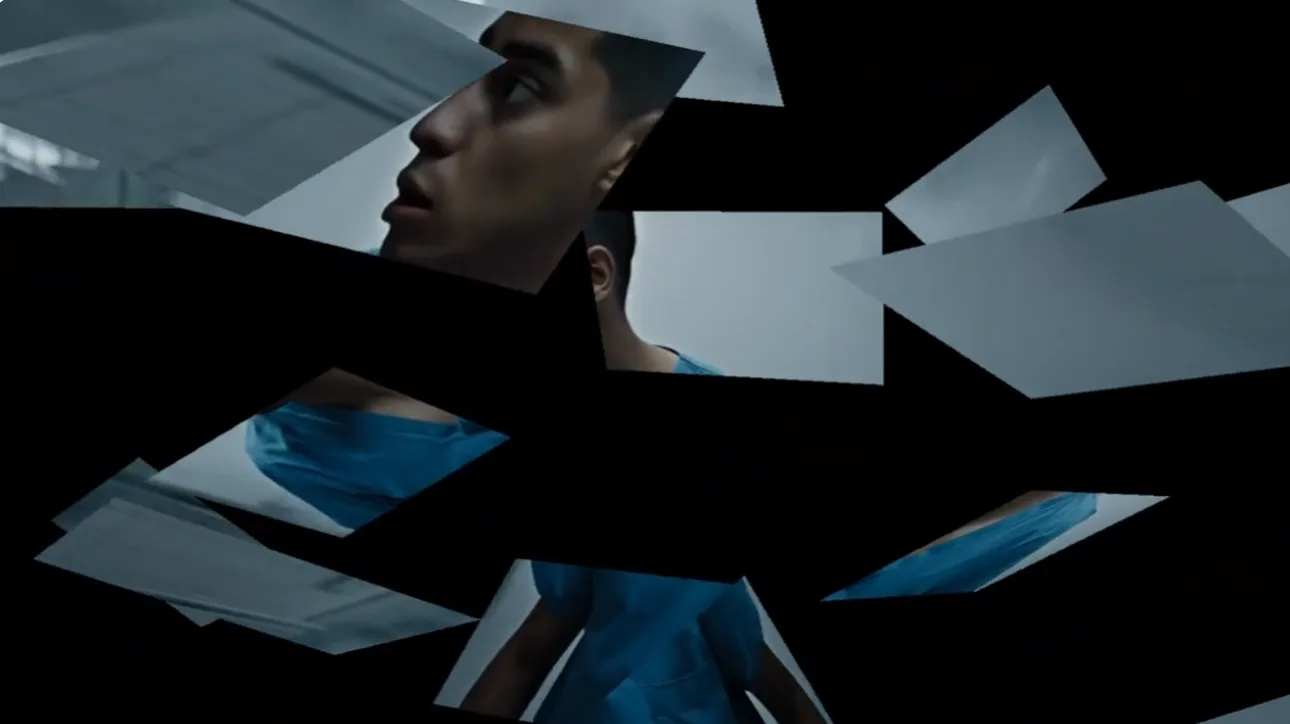
The imagery makes the ward feel industrial rather than therapeutic. Human behaviour is adjusted. Irregularity is treated as malfunction. Individuality becomes a defect requiring correction.
Kesey’s mechanical language creates dread because machines do not hate their components.
They simply process them.
A cruel individual can sometimes be persuaded, resisted or exposed. A system is harder to confront because responsibility disappears into procedure.
Everyone is merely performing a role.
The rules were already there.
The meeting has always been conducted this way.
The machine appears to run by itself.
Bromden’s paranoia exaggerates that system until literal machinery fills the walls. But exaggeration allows us to see a form of control that polite, realistic language might conceal.
What Writers Can Learn from Kesey
Begin with the emotion your viewpoint character cannot explain directly.
Fear, grief, jealousy and shame are abstract words. Instead of naming the emotion, redesign the physical world through it.
If the character feels powerless, perhaps ceilings rise and other people appear impossibly tall.
If they feel trapped, corridors might return them to the same room.
If they feel watched, ordinary objects may begin resembling eyes.
Choose one recurring image and allow it to change with the character’s state of mind.
Kesey’s fog does not appear randomly. It thickens when Bromden feels helpless and recedes as he regains agency. It therefore becomes an emotional measuring instrument.
The distorted image should also reveal something true.
If it merely makes the prose unusual, it becomes decoration. If it exposes a power relationship, buried fear or unseen pattern, it gives the reader access to a deeper reality.
Finally, resist explaining every distortion immediately.
Let readers experience it before translating it.
Confusion is not always a failure of clarity.
Sometimes confusion is the intended sensation.
Your Turn
Write a short scene in which a character enters a place where they possess very little power.
It might be a principal’s office, courtroom, hospital, workplace meeting or unfamiliar family home.
Do not tell us that the character feels intimidated.
Alter one element of the environment through their perception.
Perhaps the table lengthens whenever someone asks a question. The fluorescent lights buzz in rhythm with a person’s voice. Files in a cabinet seem to breathe. A doorway becomes smaller each time the character considers leaving.
Treat the distortion as physical reality.
Then introduce one moment when the character resists.
Change the image slightly.
The light flickers. The machine misses a beat. A corner of the room becomes visible through the fog.
That small perceptual change can communicate an internal transformation without naming it.
Kesey does not merely tell us that Bromden is frightened, controlled or awakening.
He makes us inhabit the machinery, lose ourselves in the fog—and then struggle beside him to see again.
Previously in Writer Mind Games: Jorge Luis Borges and the Mental Maze.
Next: Vladimir Nabokov and the Beauty Trap.